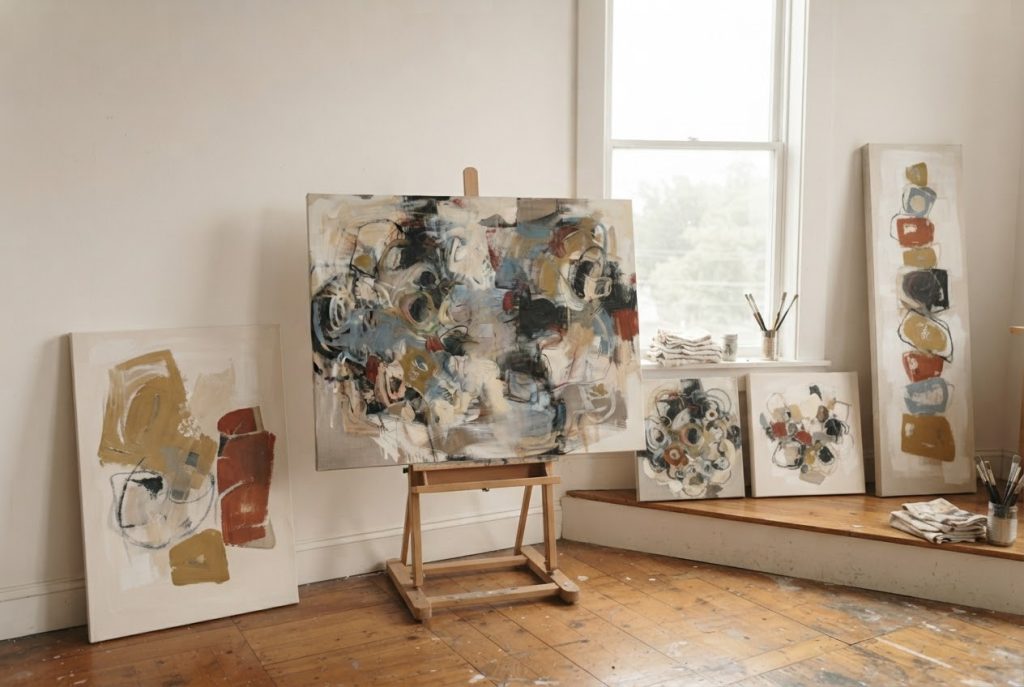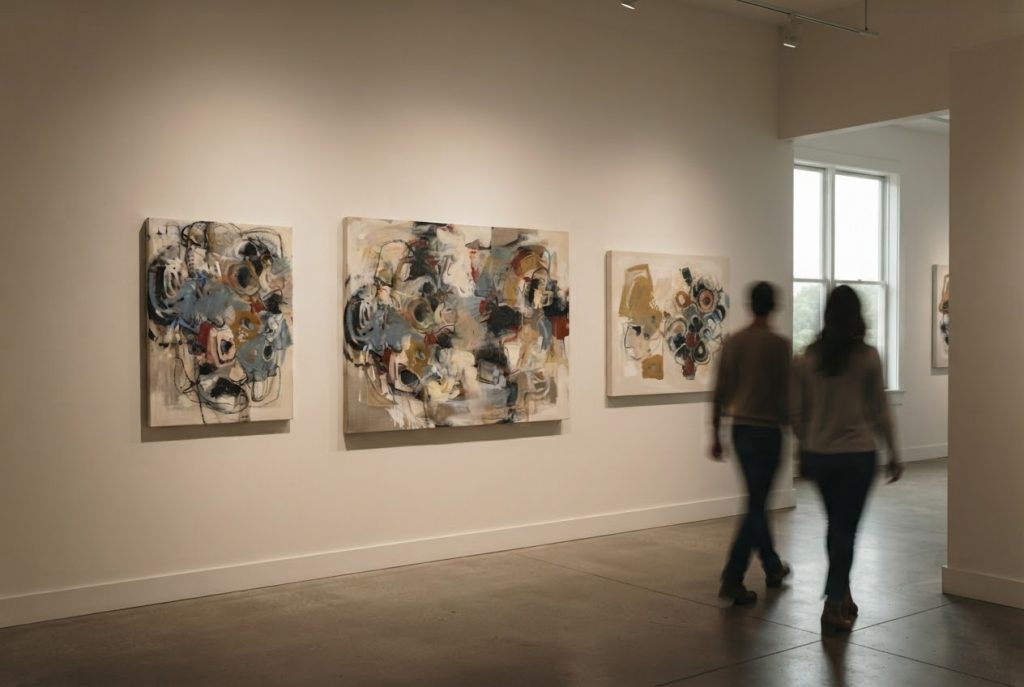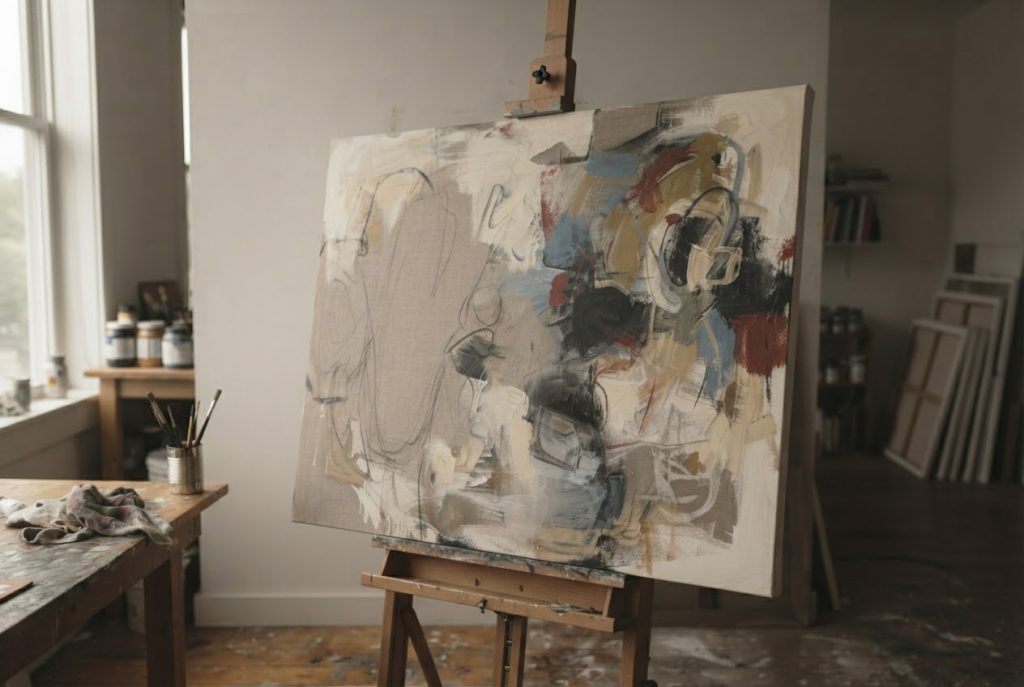
There was a point in this painting when I stopped knowing what to do next.
The composition was there. The main colors were in place, and the original idea was still recognizable. But something felt too settled, as though I had arrived at an answer before I had fully understood the question.
My first instinct was to keep working. Add another layer, adjust a shape, change the balance. Doing something felt more productive than sitting with the uncertainty. So I put the brush down and left the painting where it was.
When the First Idea Stops Working
I often begin a painting with a direction in mind. It might be an image, a color relationship, or a feeling I want to explore. That starting point gives me something to work toward, but it does not guarantee that the work will develop as expected.
As the painting takes shape, the decisions begin to affect one another. A small adjustment can change the balance of the whole composition. A color that works beautifully on its own may become distracting when placed beside another. Sometimes the painting asks for a direction I had not considered.
Returning to the Canvas
When I returned to this particular work, I tried to look at it without immediately deciding what was wrong.
I moved around the canvas, looked at it from a distance, and paid attention to where my eyes naturally rested. I noticed that one area was demanding too much attention while another had become almost invisible. The problem was not that the painting needed more detail. It needed a different balance.
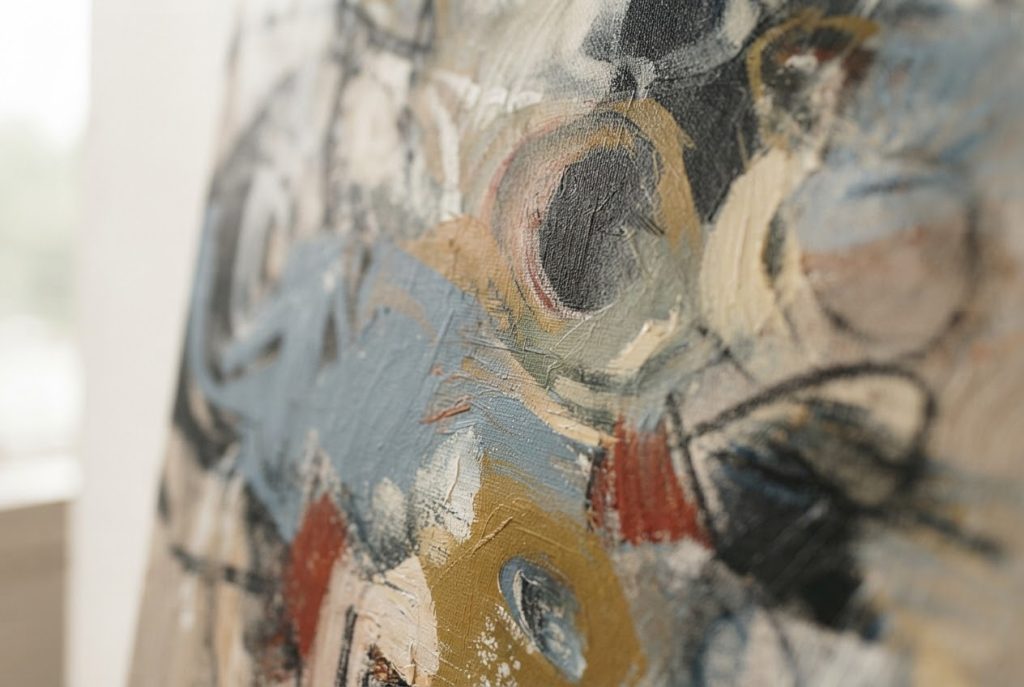
Sometimes the next step is not to add something, but to understand what is already there.
That sentence describes something I am still learning. Making art involves action, but it also requires attention. Not every pause is a lack of progress.
What I Can Control
There are practical things I can do when a painting becomes difficult. I can prepare the materials, return to the work with fresh eyes, test a color before committing to it, or make a small study before changing the original surface.
I can also ask more specific questions. Instead of asking whether the painting is good, I can ask whether its composition feels balanced, whether the colors support one another, or whether a particular mark contributes to the whole.
What I Must Leave Open
What I cannot fully control is how the work will develop once I begin responding to it. A useful decision may lead somewhere unexpected. A mistake may reveal a possibility that a careful plan would never have produced.
I have come to see this openness as part of the practice, rather than a problem to eliminate. It does not mean working without intention. It means allowing intention and discovery to remain in conversation.
Knowing When to Stop
Finishing a painting requires a different kind of attention from starting one. At some point, the question changes from what else could be done to what the work actually needs.
These are a few reminders I return to when I find myself making changes without a clear reason:
- Step back and look at the whole composition before adjusting individual details.
- Give the work time away from the studio before making a final decision.
- Be willing to stop when another change would serve my uncertainty more than the painting.
None of these rules guarantees a perfect ending. They simply help me make decisions with greater care.
I eventually returned to the painting that had unsettled me. I changed a few areas, removed a detail that no longer belonged, and left other parts as they were. The result was not what I had imagined at the beginning, but it felt more honest to the process that had taken place.
I am learning that unfinished does not always mean incomplete. Sometimes it means that I am still listening, still looking, and still learning what the work is asking of me.